Insights & Media

Ideas that Move.

Thought leadership, field dispatches, newsletters, and multimedia content from the Tridifa ecosystem.

Thought Leadership

Recent Posts

Please visit our LinkedIn page for more insights and discussions.

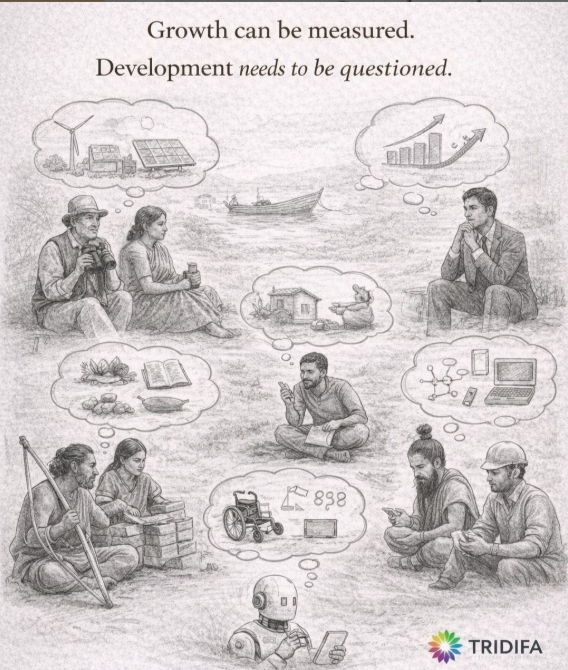
Tridifa thought-leadership visual: True development is defined by the lived experiences of the marginalised many rather than the aspirations of the privileged few.

True development is defined by the lived experiences of the marginalised many rather than the aspirations of the privileged few.

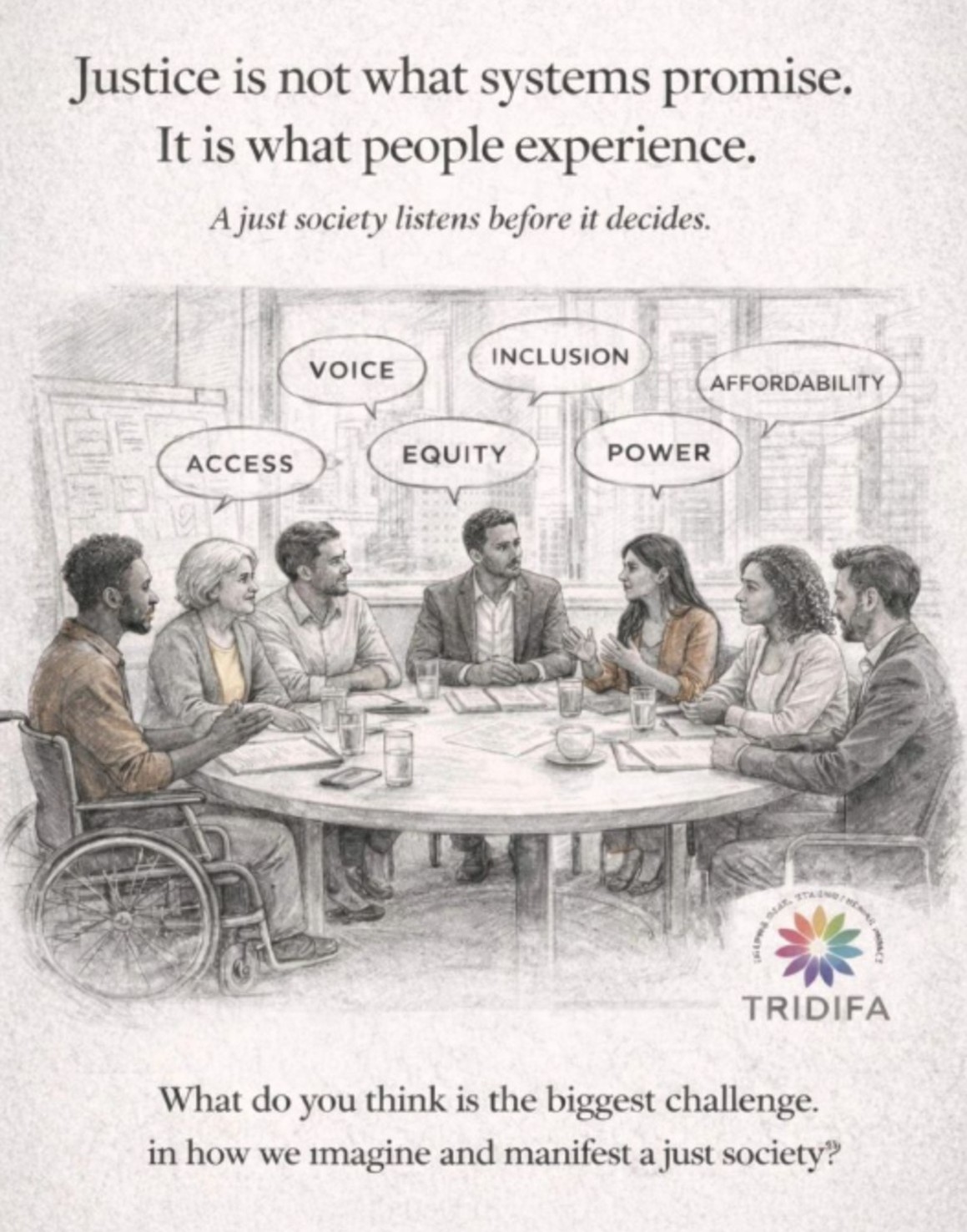
Tridifa thought-leadership visual: Justice is not what systems promise. It is what people experience.

Justice is not what systems promise. It is what people experience.

Tridifa thought-leadership visual: If climate change is increasingly a social transition, why are our responses still designed as environmental interventions?

If climate change is increasingly a social transition, why are our responses still designed as environmental interventions?

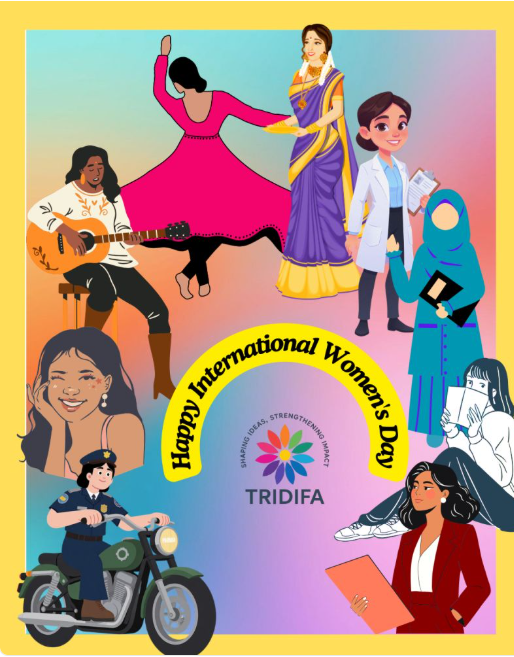
Tridifa thought-leadership visual: Soft in respect, strong in self—that's a woman. She became the answer to every "can she?" Unapologetically HER.

Soft in respect, strong in self—that's a woman. She became the answer to every "can she?" Unapologetically HER.

Tridifa thought-leadership visual: When climate pressure forces movement, are our social systems actually designed for that reality?

When climate pressure forces movement, are our social systems actually designed for that reality?

Knowledge, Evidence & Practice

A media and knowledge hub for evidence-led development

Tridifa Consulting's media hub brings together ideas, newsletters, field videos, impact reflections and visual documentation from development-sector practice. The purpose is not simply to publish updates. It is to make research, programme experience and institutional learning easier to understand, discuss and use.

Development work produces many forms of knowledge: survey findings, field observations, community perspectives, monitoring data, programme lessons, implementation challenges and evidence about what may need to change. These materials become more valuable when they are interpreted carefully and communicated in formats suited to different audiences—from government and CSR teams to nonprofits, foundations, researchers, practitioners and social enterprises.

This page therefore sits alongside Tridifa's case studies and selected assignments, advisory solutions and multidisciplinary ecosystem. Together, these resources show how Tridifa connects field evidence, public policy, programme strategy, research, evaluation and practical implementation.
01

Ideas & Thought Leadership

Short-form reflections and perspective pieces exploring development practice, justice, climate change, gender, social systems, public policy and the questions that shape programme choices. These ideas are intended to provoke useful discussion rather than present development as a collection of simple or universal answers.

02

Tridifa Development Review

Longer-form newsletters and insights that connect public policy, programme design, monitoring, institutional systems and measurable social impact. The Review creates space to examine why development systems succeed or struggle, how evidence is used, and what organisations can learn from implementation.

03

Field Audio Visuals

Videos from field operations, community engagement and programme documentation that add context beyond written reports. Visual evidence helps show how research, consultations, implementation processes and community perspectives appear in practice, while preserving the distinction between documentation and formal evaluation findings.

04

Impact & Practice Reflections

Reflections on the relationship between evidence, strategy and implementation. This section focuses on how organisations can move from good intentions to practical pathways, use data more effectively, test assumptions and strengthen the systems through which programmes are designed, delivered and improved.

05

Field Gallery

A visual record of development practice across community meetings, livelihood interventions, agriculture, livestock, water systems and field engagement. Gallery images complement the written case-study and assignment portfolio by providing grounded context from programme environments and research interactions.

From Evidence to Learning

How field knowledge becomes useful institutional learning

Media and knowledge products are most useful when they remain connected to the evidence and decisions behind them. A field photograph, video, newsletter or insight should add context, surface a question or help an audience understand a programme more clearly—not replace formal research or overstate what the evidence can support.

01

Observe the field

Start with context, lived experience, implementation conditions and the realities that programme teams and communities encounter.

02

Generate and interpret evidence

Connect qualitative and quantitative research, monitoring data, stakeholder perspectives and programme documentation to the decision being made.

03

Translate learning

Turn findings into accessible insights, case studies, reports, newsletters, visual stories and practical recommendations for different audiences.

04

Support better decisions

Use communication and knowledge products to strengthen programme design, institutional learning, partnerships, accountability and future action.

Looking for deeper evidence?

The media hub offers public-facing ideas and documentation. For detailed examples of programme evidence, beneficiary pathways, research, evaluation, baseline studies, impact assessment and audit assignments, explore Tridifa's published case studies and selected assignment portfolio.

Explore Case Studies & Assignments