The Livelihood Challenge
Traditional goat rearing with high risk and uncertain returns
Bhawaan Singh, a resident of Kanda village in Champawat, had long depended on goat rearing as his primary livelihood. His herd was small and managed under traditional, relatively unstructured conditions. Although he invested substantial effort, goat farming remained uncertain because the production system exposed animals to several avoidable risks.
His original herd of five goats faced disease outbreaks, high mortality among newborn kids during harsh weather and threats from predators. The absence of a suitable shelter made hygiene, protection and routine management more difficult. Limited access to scientific breeding practices also constrained the quality and productivity of the herd, hence he faced lots of struggles.
For a small livestock household, these risks reinforce one another. Loss of a kid reduces future herd growth and sale potential. Disease can create treatment costs and production loss. Poor shelter increases exposure to weather and predators, while weak breeding systems can limit the value of future animals. The case therefore reflects a wider programme-design lesson: improving livestock livelihoods requires attention to survival, housing, breeding, husbandry and marketability together.
The Turning Point
Two targeted improvements changed the production system
A safer, better-managed goat shed
A well-ventilated shelter built using available permanent materials created a safer environment for the herd. Better protection from extreme weather and predators, together with improved hygiene and management, was associated with lower disease incidence and improved survival of newborn kids in the documented case.
Improved breeding support
Access to an improved breeding buck strengthened breeding options for Bhawaan's herd. The case reports healthier, stronger offspring and better market value. Breeding services were also shared with neighbouring farmers, extending the usefulness of the intervention beyond one household.
Documented Results
Herd growth, kid survival and more predictable sales
The indicators below reflect the beneficiary-level observations reported in the source case study. They describe change in this specific household and should not be treated as a controlled estimate of programme impact across all livestock interventions.
| Indicator | Before | After |
|---|---|---|
| Herd size | 5 goats | 13+ goats |
| Kid survival | High mortality | Significantly improved |
| Income pattern | Unpredictable | Annual sale of 9–10 goats |
| Farmer role | Struggling livestock farmer | Recognised locally as a model / resource farmer |
A New Beginning
From livestock survival to livelihood planning
The most important shift in the case is not simply the increase in herd size. Safer shelter and stronger management created a basis for planning. When animal survival becomes more predictable, a farmer can make better decisions about breeding, herd replacement, timing of sales and future investment.
Bhawaan's herd reportedly increased from five goats to more than thirteen, while annual sales reached nine to ten goats. The case also records improved kid survival and a more stable livelihood position. These changes reduced some of the uncertainty that had made goat rearing difficult to depend on as an income-generating activity.
A second outcome was social and institutional rather than purely financial. Other farmers began visiting Bhawaan to learn about his success of improved goat-rearing practices. His access to an improved breeding buck also created a practical service that could benefit neighbouring herds. This peer-learning effect matters because local adoption often depends on visible, trusted examples rather than training alone.
Field Evidence
What the source photographs document
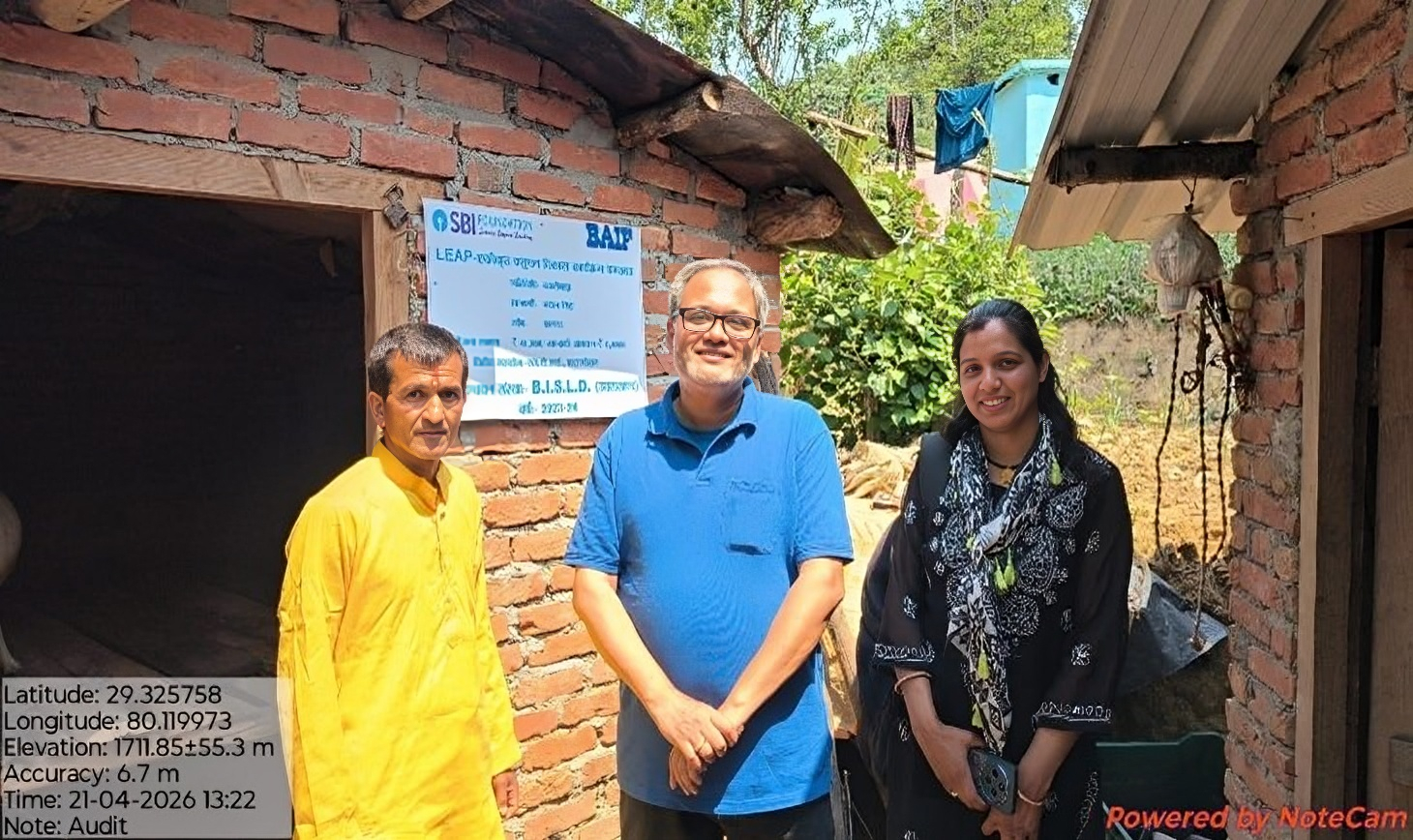
The supplied case-study document includes photographs of the goat shed and field documentation around the intervention, together with an image of a farmer holding a young goat. The visuals support the narrative around shelter, livestock management and beneficiary-level field engagement.
Why the intervention mattered
Low-cost assets can unlock value when they address the real constraint
The intervention targeted two concrete bottlenecks: unsafe housing and weak breeding access. This is a useful livelihoods principle. Asset distribution is most effective when the asset responds to a diagnosed production constraint and is supported by the management practices needed to use it well.
What still matters for sustainability
Fodder, veterinary access and markets remain important
The source case itself notes the continued importance of fodder development, veterinary services and market linkages. As herd size grows, these system-level requirements become more—not less—important because feed demand, disease exposure and the need for reliable sale channels also increase.
Institutional Learning
Lessons for goat-farming and small-livestock programmes
- ✓
Livestock housing is a productive asset when it improves safety, hygiene, weather protection and routine herd management.
- ✓
Kid survival is a critical livelihood indicator because herd growth and future sale potential depend on reducing avoidable early mortality.
- ✓
Breeding support should be linked with animal-health, husbandry and market considerations rather than treated as an isolated technical input.
- ✓
Local model farmers can become practical peer-learning resources, helping other households observe and adapt improved practices.
- ✓
Replication should assess fodder availability, veterinary access, disease-control systems, housing costs, labour requirements and realistic local demand for animals.
- ✓
Monitoring should go beyond herd size to include mortality, sales, net income, treatment costs, breeding outcomes and the durability of the shelter and management system.
Attribution & Evidence Note
This page is based on the supplied beneficiary case study for Bhawaan Singh under the SBI Foundation LEAP project. The reported herd size, sales, survival improvements and farmer status are case-level observations from that source. They should not be interpreted as a controlled impact estimate or as a guarantee of similar results elsewhere. Programme roles should remain distinct: the funder, implementing organisation, field teams, beneficiary and any research or audit partner may each contribute differently to the intervention and its documentation.
Explore More Evidence
View all case studies and selected assignments
Related Case Study
Rajendra Goswami's polyhouse farming journey