
Livelihoods · Enterprises · Value Chains

Livelihoods & Value Chain Consultants in India

Design sustainable rural and urban livelihood pathways, strengthen enterprises and producer collectives, improve market systems and measure income, agency and resilience.

Designed forNGOs & nonprofitsCSR teams & foundationsProducer collectives & FPOsGovernment-linked programmesSocial and rural enterprises

Beyond Income Activity

A livelihood is a connected system of assets, choices, markets and risks

Households rarely depend on one activity alone. Their livelihood strategies combine labour, skills, natural resources, enterprises, migration, social networks, finance and public systems across seasons and changing conditions.

Tridifa helps organisations understand that system, identify viable pathways, strengthen institutions and market relationships and build evidence around profitability, stability, agency and resilience.

Household before activity
Market before production
Net income before revenue
Resilience beyond one season

Livelihoods Consulting Services

Advisory support from household assessment to resilient markets

Engage Tridifa for a comprehensive livelihoods assignment or focused support around programme design, enterprises, producer collectives, value chains, finance readiness, MERL or scale.

01

Livelihoods, Household & Opportunity Assessment

Understand household assets, income sources, seasonality, risks, capabilities, institutions, markets and local opportunity systems before programme design.

  • Household and livelihoods assessment
  • Opportunity, vulnerability and stakeholder map
  • Prioritised livelihood pathways
02

Livelihood Programme Design & Strategy

Translate household, community and market evidence into a coherent programme model with clear outcomes, delivery roles, partnerships and sustainability logic.

  • Livelihood programme design document
  • Theory of Change and results framework
  • Implementation, risk and sustainability plan
03

Rural & Urban Livelihoods Advisory

Design context-specific pathways for rural households, urban poor communities, informal workers, migrants, street vendors and local enterprises.

  • Rural or urban livelihoods strategy
  • Target-group and service-pathway design
  • Convergence and implementation roadmap
04

Agriculture, Livestock & Allied Livelihoods

Strengthen programme strategy around farm and allied activities, input and service systems, aggregation, value addition, risk and market participation.

  • Farm and allied-livelihood assessment
  • Production-to-market programme model
  • Partnership, risk and outcome framework
05

Microenterprise & Entrepreneurship Development

Support enterprise selection, customer validation, business-model design, costing, operations, market entry and entrepreneur capability for household and community enterprises.

  • Enterprise opportunity assessment
  • Business-model and viability framework
  • Entrepreneur support and incubation plan
06

SHG, Producer Collective & FPO Strengthening

Assess and strengthen governance, member value, business planning, services, financial systems, market linkages and organisational capability of collectives.

  • Collective or FPO diagnostic
  • Member-value and business strategy
  • Governance and capability roadmap
07

Value Chain & Market Systems Development

Analyse actors, incentives, constraints, services, margins, quality, logistics, finance and power relationships across farm and non-farm value chains.

  • Value-chain and market-system analysis
  • Upgrading and partnership strategy
  • Market-linkage and implementation plan
08

Financial Inclusion & Credit Readiness

Strengthen financial capability, records, enterprise readiness, linkage processes and responsible use of formal financial services without acting as a lender.

  • Financial-inclusion and readiness assessment
  • Record, cash-flow and linkage tools
  • Financial capability and support plan
09

Climate-Resilient & Green Livelihoods

Assess climate and environmental risks and strengthen diversification, natural-resource management, green enterprise and resilience pathways.

  • Climate and livelihood-risk assessment
  • Resilient livelihood and diversification strategy
  • Green-enterprise and monitoring framework
10

Livelihood MERL, Income & Resilience Measurement

Develop monitoring, evaluation, research and learning systems that track income, profitability, assets, diversification, agency, resilience and inclusion.

  • Livelihood MERL framework
  • Baseline, tracer or evaluation study
  • Outcome interpretation and learning plan
11

Livelihood Data, MIS & Digital Systems

Define participant, enterprise, collective, production, market and outcome data flows for dashboards, field systems and programme decisions.

  • Data and digital-readiness assessment
  • MIS and dashboard requirements
  • Data-governance and adoption protocols
12

Institutional Capacity, Convergence & PMU Support

Strengthen implementation partners, community institutions, producer organisations, PMUs, governance, workplans, review systems and public-scheme convergence.

  • Institutional and partner-capacity assessment
  • PMU, governance and workplan architecture
  • Convergence and capacity-building roadmap

Tridifa Sustainable-Livelihoods Lens

Examine the assets, institutions and risks behind economic outcomes

Similar livelihood activities can produce very different results depending on who controls assets, how markets function, which risks households face and whether institutions create lasting value.

01

Human Capabilities

Skills, health, knowledge, experience, time, confidence, aspirations and the ability to make and act on livelihood choices.

02

Financial Assets

Income, savings, working capital, credit, insurance, cash flow, debt exposure and the ability to absorb financial shocks.

03

Physical Assets

Land, tools, equipment, transport, storage, housing, infrastructure, digital access and productive facilities.

04

Natural Assets

Water, soil, forests, fisheries, biodiversity, common resources and the environmental conditions supporting production and well-being.

05

Social & Institutional Assets

Household relationships, SHGs, producer groups, community institutions, trust, networks, entitlements and local governance.

06

Markets & Value Chains

Demand, buyers, suppliers, services, prices, quality, margins, logistics, competition, information and bargaining power.

07

Vulnerability & Seasonality

Climate, health, price, employment, migration, conflict, disaster and seasonal risks that affect livelihood stability.

08

Agency, Equity & Resilience

Who controls assets and income, who participates in decisions, who is excluded and whether households can adapt without harmful coping.

Livelihood Programme Lifecycle

Connect household choice, enterprise performance and resilience

A durable pathway requires more than inputs. Programmes must connect participant capability to viable production, services, markets, finance and local institutions.

  1. 01

    Understand Households & Context

    Assess livelihood assets, income sources, risks, seasonality, institutions, gender, aspirations and existing strategies.

  2. 02

    Assess Opportunities

    Examine market demand, occupations, value chains, enterprise options, services, finance, infrastructure and policy context.

  3. 03

    Co-Design Pathways

    Develop differentiated pathways suited to household capability, risk, geography, markets and participant choice.

  4. 04

    Prepare Delivery Systems

    Establish partners, community institutions, training, finance linkages, tools, safeguards, data and quality controls.

  5. 05

    Enable Production or Enterprise

    Support capability, assets, services, business operations, collective action and the transition into livelihood activity.

  6. 06

    Connect Markets & Finance

    Strengthen buyers, channels, value addition, logistics, formal finance, records and responsible growth pathways.

  7. 07

    Track Outcomes & Resilience

    Monitor income, costs, profitability, assets, inclusion, agency, risk, diversification and recovery from shocks.

  8. 08

    Improve & Institutionalise

    Use evidence to refine pathways, strengthen local institutions, improve convergence and determine conditions for scale.

Programme Applications

Cross-cutting advisory across rural, urban and enterprise livelihoods

Scope and specialist composition are matched to the participant group, geography, value chain, livelihood system and technical question.

Smallholder agriculture and allied activitiesLivestock, dairy, poultry and fisheriesForest and natural-resource-based livelihoodsArtisans, crafts and rural non-farm enterprisesWomen’s SHGs and economic empowermentFarmer and producer collectivesMicroenterprise and household businessFood processing and value additionUrban livelihoods and street-vendor systemsMigrant and informal-worker livelihoodsGreen and climate-resilient livelihoodsYouth entrepreneurship and self-employment

Livelihood Outcome Pathway

Measure whether activity becomes viable, stable and empowering

Each transition requires distinct evidence. Income alone can hide costs, instability, debt, unequal control and vulnerability to shocks.

01

Access

Can intended participants access assets, services, information, finance, institutions and opportunities?

02

Capability

Do people and organisations have the skills, confidence, systems and support required to act?

03

Production or Service

Can the livelihood activity deliver reliable quality, volume, cost and operational performance?

04

Market Participation

Can producers or enterprises reach suitable customers, buyers, channels and value-chain services?

05

Income & Profitability

Do revenues translate into net income, cash flow and viable returns after costs and household labour?

06

Stability

Is the livelihood sustained across seasons, market changes, health events and other common disruptions?

07

Resilience

Can households and enterprises anticipate, absorb, recover and adapt without damaging coping strategies?

08

Agency & Well-Being

Do participants gain greater choice, control, dignity, security and influence over livelihood decisions?

Livelihood Programme Decisions

Match the advisory response to the real livelihood constraint

Weak income, enterprise failure and market dependency may arise from different combinations of household, institutional, technical, financial and market barriers.

Livelihood situations, advisory focus and decision use
SituationAdvisory FocusDecision Use
A new livelihoods programme is being designed for a geography or community.Household assets, vulnerability, aspirations, markets, enterprise options, institutions, services, finance and climate risk.Select differentiated and realistic livelihood pathways before investment.
Training and asset distribution are complete, but income gains are weak.Enterprise use, production, costs, demand, buyers, quality, services, working capital, household constraints and follow-up.Identify why inputs are not becoming viable livelihoods.
A women’s SHG programme wants to deepen economic outcomes.Member readiness, household dynamics, enterprise models, collective services, finance, markets, leadership and agency.Move from group formation and savings to member-centred economic value.
A producer collective or FPO is active but commercially weak.Member value, governance, volumes, services, margins, working capital, management, buyers, data and risk.Strengthen the collective as a member-owned business institution.
A value-chain programme is dominated by one buyer or intermediary.Market structure, power, quality, price formation, services, contracts, alternative channels, collective action and risk.Improve bargaining position and reduce avoidable dependency.
A livelihoods programme is exposed to climate and seasonal shocks.Hazard, resource dependence, income seasonality, diversification, financial protection, ecosystems and local institutions.Strengthen resilience rather than temporary recovery alone.
A funder or CSR team needs credible livelihood-outcome evidence.Income and cost definitions, attribution, assets, profitability, resilience, inclusion, agency, sustainability and participant experience.Strengthen funding, portfolio and programme decisions.
A successful pilot is preparing for expansion.Market depth, participant variation, partner capacity, local institutions, economics, finance, data, quality and adaptation.Determine where and under which conditions scale is justified.
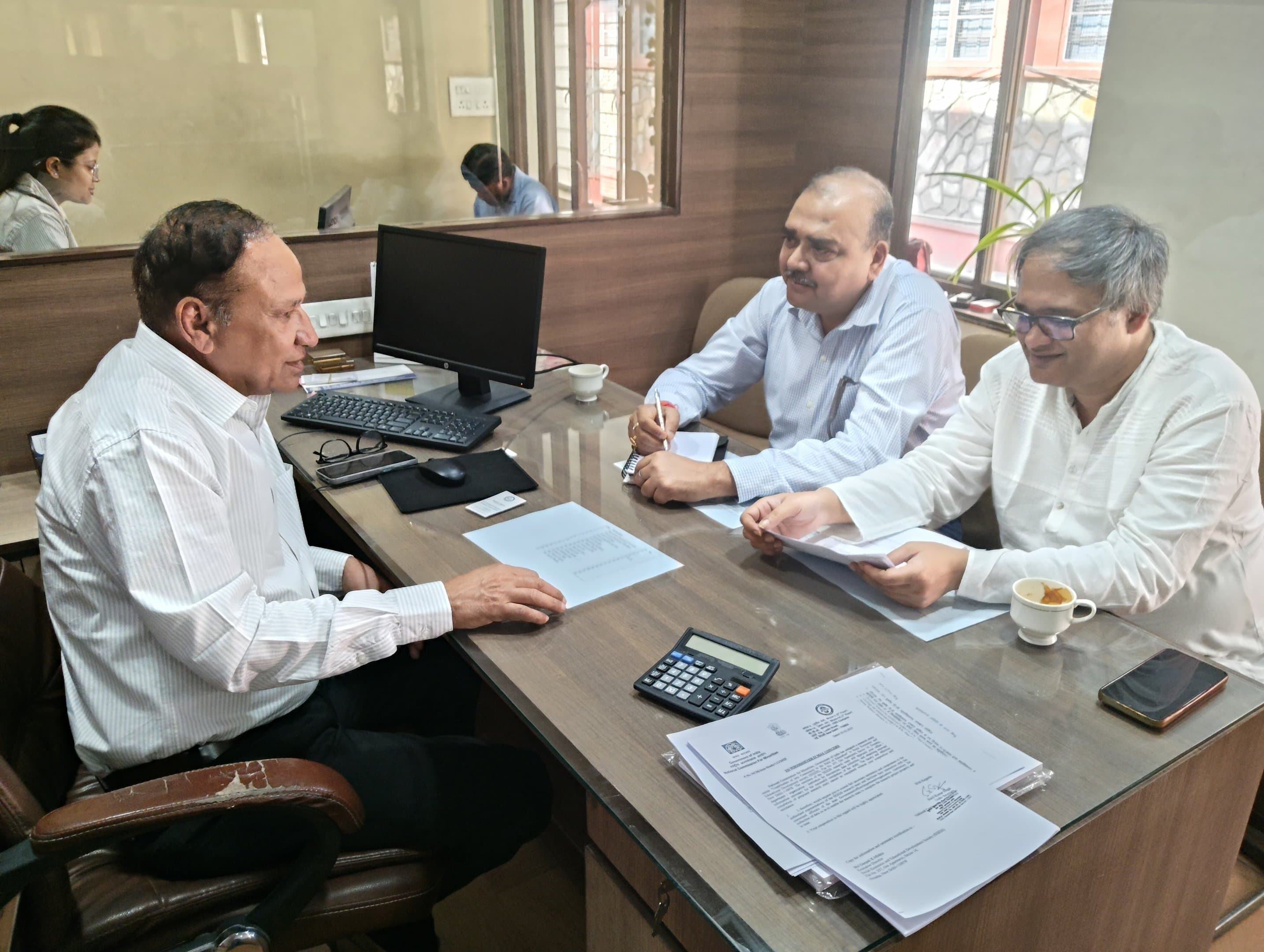
Producer group and programme partners reviewing collective business and market-linkage strategy

Collective Enterprise

Member institutions must create value beyond registration

SHGs, FPOs & Producer Collectives

Strengthen governance, services and collective market power

Collective structures become meaningful when members receive reliable services, better information, stronger market access, improved economics and accountable governance.

Clear member needs and value proposition

Transparent governance and decision rights

Viable services, margins and working capital

Reliable volumes, quality and operations

Buyer, supplier and finance relationships

Member data, communication and accountability

Finance, Markets & Risk

Credit and market linkage should follow viability and informed choice

Finance can enable production and enterprise growth, but it can also increase vulnerability when cash flow, repayment capacity, market demand, household risk and business records are weak.

Demand and buyer evidence
Cost, margin and cash-flow logic
Household and enterprise risk
Records and financial capability
Responsible credit-readiness process
Alternative channels and contingency plans

When to Engage

Signs your livelihoods programme needs stronger advisory support

Livelihood activities are selected before household capability, risk and market demand are understood.

Training or asset distribution is treated as an outcome rather than an input into a longer livelihood pathway.

Income is reported without consistent treatment of costs, household labour, seasonality or business survival.

Market linkage means a one-time buyer event rather than a durable relationship, channel or service system.

SHGs, producer groups or FPOs exist, but member value, governance and business systems remain weak.

Credit is promoted before cash flow, repayment capacity, records, risk and enterprise viability are understood.

Climate, health, price and migration shocks are not reflected in programme design or outcome measurement.

A pilot is being scaled before local demand, institutional capacity, partner quality and sustained outcomes are validated.

Typical Engagement Outputs

Practical products for households, enterprises and institutions

Deliverables are selected around the participant group, livelihood system, market context, programme stage and implementation ownership.

Household and livelihoods assessment
Livelihood opportunity assessment
Livelihood programme design
Theory of Change
Rural or urban livelihoods strategy
Farm and allied-livelihood assessment
Enterprise opportunity and viability framework
SHG or producer-collective diagnostic
FPO business and governance strategy
Value-chain and market-system analysis
Market-linkage strategy
Financial-inclusion and credit-readiness framework
Climate-resilient livelihoods strategy
Livelihood MERL framework
Income, enterprise or resilience baseline
Livelihood programme evaluation
MIS and dashboard requirements
Scale and institutionalisation roadmap

Frequently Asked Questions

Sustainable livelihoods and value-chain consulting

What does a livelihoods consultant do?

A livelihoods consultant helps organisations understand how people earn and sustain a living, assess household and market conditions, design livelihood programmes, strengthen enterprises and collectives, improve value chains, build evidence systems and support implementation or scale.

What is a sustainable livelihood?

A sustainable livelihood combines capabilities, assets, activities, institutions and market opportunities in a way that supports well-being over time, can cope with and recover from shocks and does not undermine the natural or social systems on which it depends.

What is the difference between livelihood development and skill development?

Skill development focuses on competencies required for work, enterprise and progression. Livelihood development is broader: it also includes assets, markets, finance, natural resources, institutions, household decisions, risk, income stability and resilience. Skills may be one part of a livelihood pathway.

What is a livelihoods assessment?

A livelihoods assessment examines income sources, assets, capabilities, markets, institutions, seasonality, risks, gender and social dynamics, existing strategies and the constraints that shape household or enterprise choices.

What is value-chain development?

Value-chain development examines how products or services move from inputs and production through aggregation, processing, logistics and markets. It seeks to improve participation, quality, efficiency, services, margins, relationships and value captured by target producers or enterprises.

Can Tridifa support SHGs, producer groups and FPOs?

Yes. Support can include member and business diagnostics, governance, service design, business planning, market strategy, data systems, capability building, monitoring and scale readiness. Formal registration, statutory filings and regulated professional functions must be handled by competent authorities and qualified professionals.

How should livelihood income be measured?

Measurement should define the unit, time period and household or enterprise boundary clearly. It may include revenue, direct and indirect costs, household labour, net income, seasonality, business survival, assets, debt, diversification and changes in other livelihood sources.

How is livelihood resilience measured?

Resilience measurement may examine diversification, savings, assets, access to services and finance, adaptive capacity, recovery time, exposure to shocks, social support, natural-resource security, continuity and the use of harmful coping strategies.

Can Tridifa support rural and urban livelihood programmes?

Yes. Rural and urban programmes require different evidence, institutions, markets and delivery systems. Tridifa can support farm, non-farm, collective, microenterprise, informal-worker, vendor, migrant and community livelihood pathways depending on assignment scope.

Can livelihoods advisory support CSR programmes?

Yes. Tridifa can support CSR livelihood needs assessment, programme design, partner assessment, value chains, SHGs and collectives, market systems, monitoring, evaluation, impact reporting and sustainability planning.

Does Tridifa provide loans, credit approval or guaranteed market access?

No. Tridifa can support financial capability, credit readiness, records, market research, buyer strategy and linkage processes. Loan sanction, underwriting, investment decisions, buyer commitments and income or market guarantees remain with the relevant institutions and counterparties.

Does Tridifa provide statutory registration, legal, tax or specialist agricultural certification?

No. Tridifa provides strategic, programme, research, market, MERL, data and institutional advisory. Registration, contracts, legal opinions, tax, accounting, credit certification, engineering and specialist agricultural or technical certification require appropriately qualified professionals and competent authorities.
Current Livelihoods-Ecosystem Context

Official rural, urban, enterprise and producer resources

Programme, enterprise, finance and collective decisions should be checked against the latest scheme, registration, market, technical and institutional requirements relevant to each assignment.

Build More Sustainable Livelihood Pathways

Connect household capability, markets and resilience

Tell us the participant group, geography, livelihood system, programme stage and decision ahead. We will help define a credible and proportionate advisory pathway.

Start a livelihoods advisory conversation